
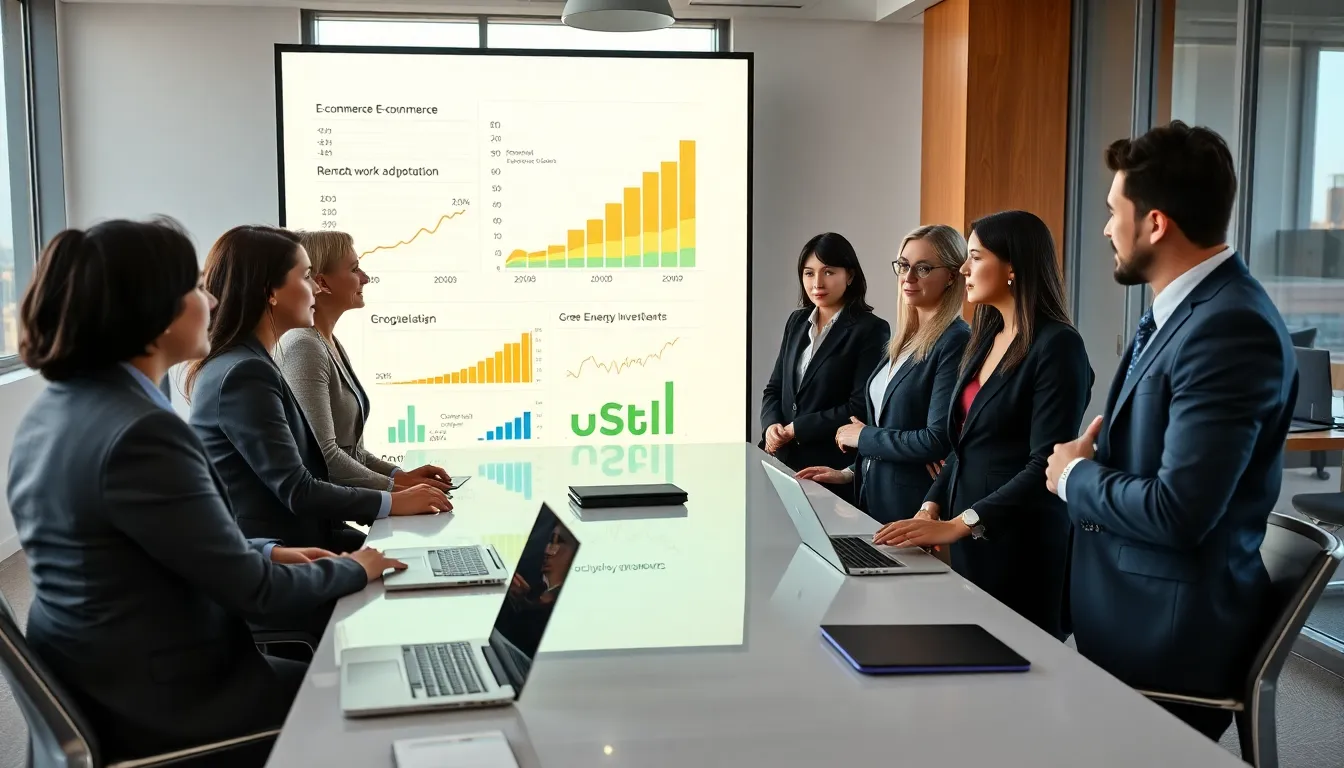
Picture this: you’re at a party, and someone brings up economic trends. Suddenly, the room lights up. Okay, maybe that’s a bit dramatic, but understanding economic trends is crucial for anyone interested in finance, business, or just staying informed. These trends reflect the rhythms and shifts of the economy, showing us where we’ve been and where we’re headed. From inflation spikes that make coffee more expensive to job market changes impacting your next career move, economic trends touch every aspect of our lives. Let’s jump into the intriguing realm of economic phenomena together.
Understanding Economic Trends

Economic trends are more than just numbers on a screen. They represent the underlying health of an economy and give insights into consumer behavior, investment opportunities, and potential policy decisions. At their core, these trends can be measured through various indicators, such as gross domestic product (GDP), unemployment rates, inflation figures, and consumer confidence indices.
Understanding these trends is essential for making informed decisions. For instance, a growing GDP typically signals economic expansion, while rising unemployment rates can indicate troubles ahead. By grasping these patterns, individuals and businesses alike can prepare for impending market changes.
Key Types of Economic Trends
Economic trends generally fall into three major categories:
1. Cyclical Trends
Cyclical trends correlate closely with the economic cycle, fluctuating between expansions and contractions. For example, during economic booms, consumer spending increases, while recessions often bring about tight budgets.
2. Secular Trends
Secular trends represent long-term shifts in the economy that can span years or even decades. Take, for instance, the move towards digital banking. This secular trend reflects changing values and preferences among consumers.
3. Seasonal Trends
Seasonal trends follow regular patterns throughout the year. Think of holiday shopping spikes each December or increased spending on vacations during summer. Businesses often use seasonal data to predict sales and adjust inventory accordingly.
Examples of Economic Trends
- The Rise of E-commerce
The shift from brick-and-mortar stores to online shopping exemplifies a significant economic trend. This change has transformed retail strategies and consumer habits, especially accelerated by the pandemic.
- Remote Work
The global move towards remote work has reshaped employment landscapes. Companies are reevaluating office space needs and workers are adapting to flexible schedules.
- Green Energy Investments
Increasing investments in renewable energy reflect a crucial trend towards sustainability. With rising climate concerns, more businesses are pivoting to eco-friendly practices.
- Aging Population
In many developed nations, aging populations are affecting labor markets and healthcare services. Understanding this trend is vital for businesses aiming to cater to older demographics.
- Cryptocurrency Growth
The ascent of cryptocurrencies like Bitcoin marks a transformative moment in finance. This trend highlights shifts in trust, value, and transaction methods in the digital era.
Impact of Economic Trends on Society
Economic trends significantly influence societal norms and behaviors. For example, during times of economic growth, communities may experience lower unemployment rates, enhancing quality of life. Conversely, a downturn can lead to increased financial strain, affecting mental health and community dynamics.
Besides, these trends shape public policies. For instance, a burgeoning gig economy has led to debates surrounding worker rights and benefits.
Understanding these impacts helps various stakeholders, be it governments, businesses, or consumers, navigate an ever-changing landscape and adapt to societal needs.
Analyzing Historical Economic Trends
Studying history provides invaluable insights into current economic trends. For instance, the 2008 financial crisis showcased how interconnected financial systems could impact global markets. By analyzing such historical data, economists can gauge response strategies and warning signs for future downturns.
Utilizing historical economic indicators, analysts have encountered recurring patterns that can forecast trends. For example, during economic recoveries, consumer spending tends to rise before employment levels fully bounce back. Utilizing these insights allows businesses to make informed strategic decisions.
Future Economic Trends to Watch
Looking ahead, several economic trends are set to shape our world:
1. Artificial Intelligence in Business
As AI technology continues to advance, its impact on workplaces and industries is becoming more profound. Expect AI to optimize operations, affecting employment and productivity levels.
2. Sustainable Practices
As climate change concerns rise, businesses that embrace sustainable practices will likely thrive. The focus on eco-friendly products and processes is becoming increasingly relevant.
3. Shift Toward Localism
Recent trends show a growing interest in local products and services. This shift toward localism reflects broader concerns about sustainability and economic resilience.
4. Healthcare Innovations
With advancements in biomedical technology and telemedicine, the healthcare sector is poised for significant transformation. This could improve access to services, but it also raises questions about affordability and equity.
5. Changing Consumer Behavior
As younger generations gain purchasing power, their preferences and shopping habits will continue to influence market dynamics. Businesses must stay attuned to these changes to remain competitive.


